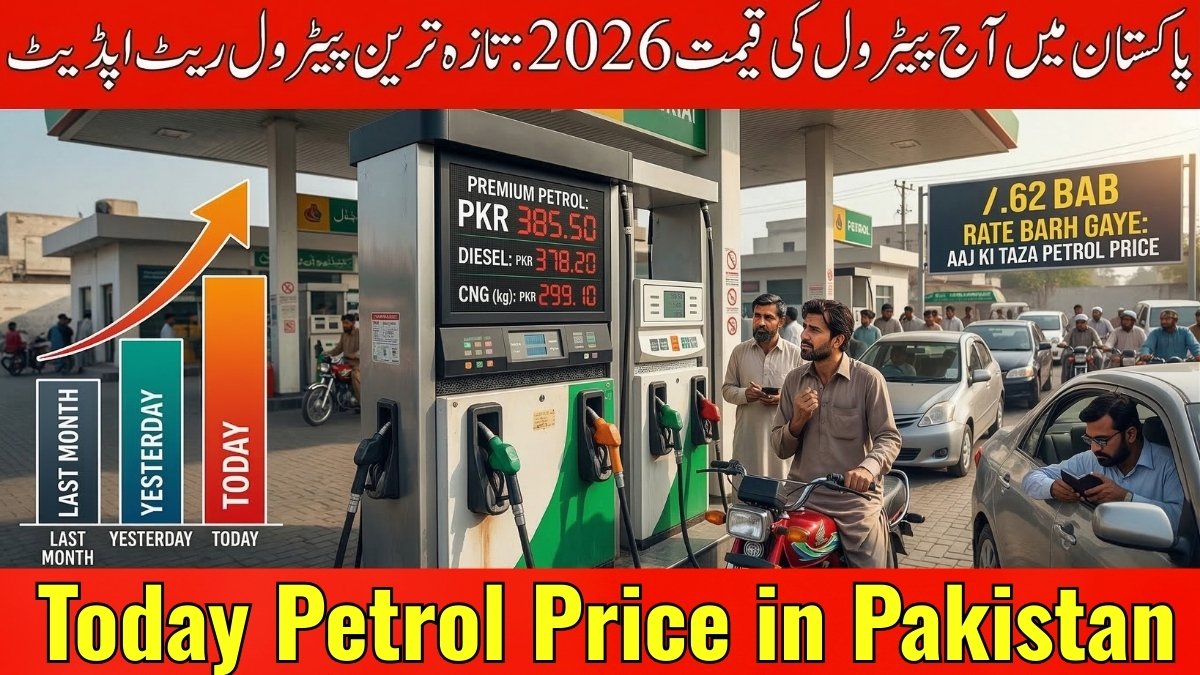
Latest Petrol Rate Update 2026 Petrol prices in Pakistan are one of the most discussed economic topics because fuel costs directly affect transportation, food prices, and overall inflation. Every time petrol prices increase, it impacts daily life for millions of people. The government of Pakistan reviews petroleum prices regularly based on international oil market conditions, currency exchange rates, and import costs.
In 2026, petrol prices have seen significant fluctuations due to global oil supply issues and rising international crude oil prices. This blog post explains the current petrol price in Pakistan, recent increases, and the latest updates about fuel rates in 2026.
Petrol Price in Pakistan Today (2026)
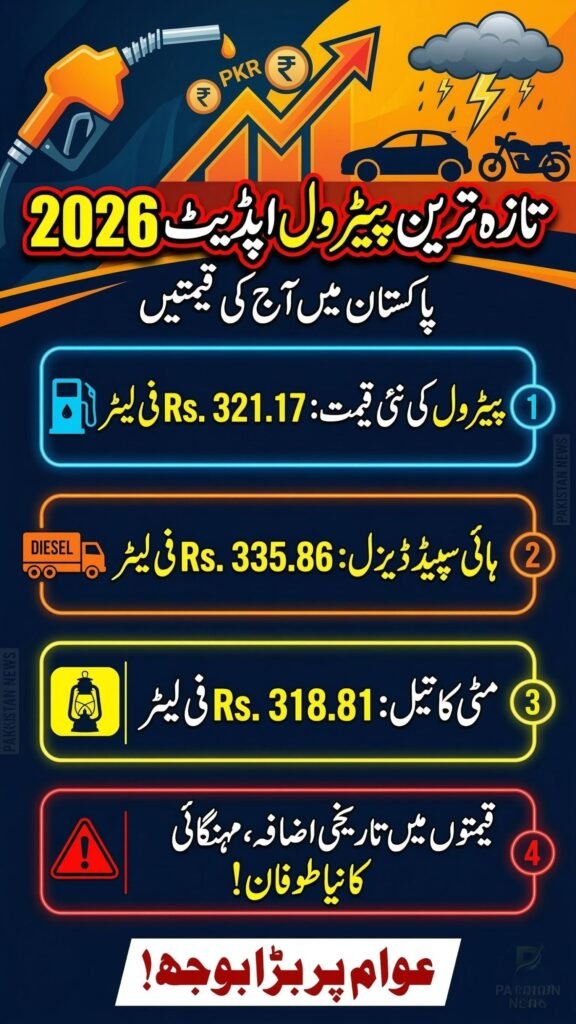
According to the latest government notification, the current petrol price in Pakistan is around Rs. 321.17 per litre, while high-speed diesel is about Rs. 335.86 per litre.
Here are the latest fuel prices:
- Petrol (Motor Spirit): Rs. 321.17 per litre
- High-Speed Diesel (HSD): Rs. 335.86 per litre
- Kerosene Oil: Rs. 318.81 per litre
- Light Diesel Oil: Rs. 235.01 per litre
These prices are applied nationwide, although small differences may occur in some cities due to freight charges and dealer margins.
Latest Update About Petrol Prices in Pakistan
The latest update shows that petrol prices increased sharply in early 2026. The government raised petrol and diesel prices by about Rs.55 per litre due to rising global oil prices and supply pressures.
This increase pushed the petrol rate to Rs.321.17 per litre, making it one of the highest fuel prices seen in recent years.
Officials explained that Pakistan imports a large portion of its petroleum, so global oil market fluctuations strongly influence domestic prices. When international crude oil becomes expensive, the local petrol price also increases.
Read Also: Elementary Secondary & Higher Secondary Karachi Jobs 2026
Why Petrol Prices Increased in 2026
Several major factors caused petrol prices to rise in Pakistan during 2026.
1. Rising Global Oil Prices
International crude oil prices have increased due to geopolitical tensions and supply disruptions in the Middle East. This has raised fuel costs for many countries, including Pakistan.
2. Pakistan’s Dependence on Imported Oil
Pakistan imports most of its petroleum products. When global prices rise or the rupee weakens, the government has to increase local fuel prices to cover import costs.
3. Transportation and Supply Costs
Freight charges, refinery costs, and distribution expenses also affect final petrol prices at fuel stations across the country.
4. Economic and Inflation Pressure
Higher petrol prices are also linked to overall economic challenges. Fuel price increases often lead to higher transport costs, which then raise prices of goods and services.
Read Also: Latest National NUML Education Posts Islamabad | Islamabad Jobs 2026
Impact of Petrol Price Increase on People
The increase in petrol prices has affected many sectors in Pakistan.
Transportation Costs
Higher petrol prices mean bus fares, taxi charges, and ride-hailing costs increase. This directly affects commuters and daily travelers.
Inflation in Goods
When transport costs rise, the price of food and household items also increases. Businesses pass the extra cost to consumers.
Industrial and Agricultural Impact
Fuel is used in agriculture and industry, so higher petrol and diesel prices can increase production costs.
Government Strategy for Fuel Prices
The Pakistani government reviews petrol prices regularly and sometimes changes them every two weeks or weekly depending on market conditions. Officials have said that future fuel prices will be reviewed frequently to respond to international oil market changes.
Authorities are also monitoring the global oil supply situation and working on strategies to stabilize prices if possible.
Future Outlook for Petrol Prices
Experts believe petrol prices may continue to fluctuate during 2026 depending on global oil supply and international conflicts. If global crude oil prices fall, petrol prices in Pakistan could decrease. However, if international tensions continue, fuel costs may remain high.
Many analysts say that reducing dependence on imported fuel and increasing alternative energy sources could help Pakistan stabilize fuel prices in the long term.
Read Also: 9999 Check Online 2026 | How to Get Rs 13,000 Ramadan Relief | Online CNIC Check
Conclusion
Petrol prices in Pakistan have increased significantly in 2026 due to global oil price increases and supply challenges. Currently, the petrol rate is around Rs.321.17 per litre, while diesel is around Rs.335.86 per litre. These prices directly affect transportation, inflation, and everyday living costs.
The government continues to review fuel prices based on international market conditions, and future changes will depend largely on global crude oil trends. Citizens are advised to stay updated with official announcements for the latest petrol price updates in Pakistan.