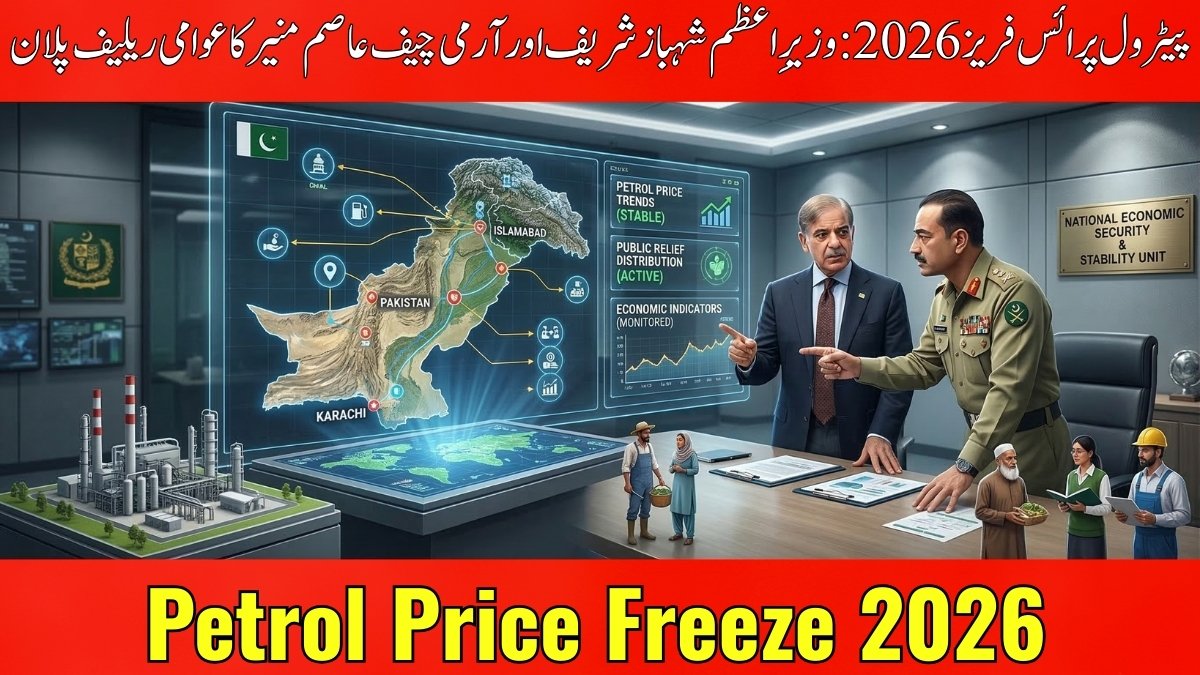
Pakistan is facing rising economic pressure because global oil prices are increasing. To reduce the impact of inflation on citizens, the government is considering freezing petrol prices for a certain period. This step is being discussed as a way to provide relief to people dealing with higher living costs.
Prime Minister Shehbaz Sharif and COAS General Asim Munir have reportedly discussed economic stability and fuel price management. The main goal of this plan is to pPetrol Price Freeze 2026: PM Shehbaz & COAS Munir Plan Relief for Pakistan
Pakistan is currently facing economic challenges due to rising inflation and increasing global oil prices. Fuel prices have a direct impact on transportation, goods delivery, and the overall cost of living. Because of this, the government is working on strategies to provide relief to the public. One of the most discussed steps in 2026 is the plan to freeze petrol prices for a certain period.
Reports suggest that Prime Minister Shehbaz Sharif and Chief of Army Staff General Asim Munir have discussed economic stability and possible relief measures for the public. Their discussions focus on controlling fuel price increases so that citizens do not face additional financial pressure during an already difficult economic period.
Why Petrol Price Freeze Is Being Considered
Petrol prices in Pakistan are normally revised every fifteen days based on international oil market trends and exchange rate changes. When crude oil prices rise globally, the domestic petrol price usually increases as well. This system ensures that Pakistan’s fuel market stays aligned with international rates.
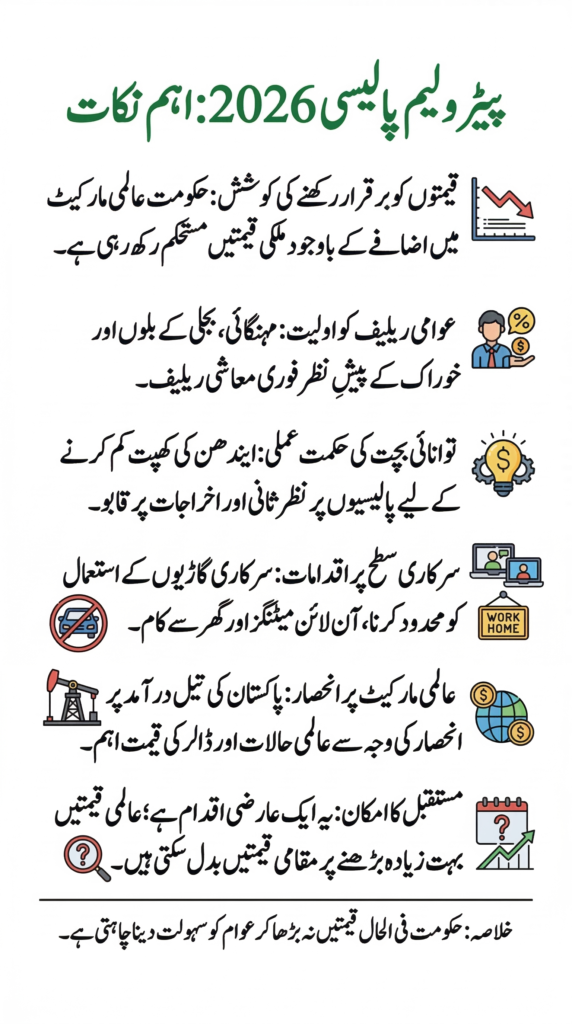
However, in 2026 the government is considering freezing petrol prices despite fluctuations in global oil markets. The purpose of this step is to protect the public from sudden price increases that can worsen inflation. By keeping petrol prices stable, the government hopes to control the cost of transportation and essential goods.
Impact of Petrol Prices on Daily Life
Petrol prices play a major role in Pakistan’s economy because transportation depends heavily on fuel. When petrol prices increase, transport fares also rise. This affects people who travel daily for work, students who commute to schools, and businesses that depend on delivery services.
Higher fuel costs also increase the price of food and other basic items. Trucks and delivery vehicles transport goods across the country, so any increase in fuel prices quickly spreads across the entire market. Because of this, controlling petrol prices is considered an important step to reduce inflation pressure.
Also Read: 8171 BISP CNIC Verification 2026 – Step-by-Step Payment Check Guide
Latest Update About Petrol Price Policy 2026
The latest update indicates that the government is trying to keep petrol prices unchanged for the current review period. Even though international crude oil prices have shown some increases, authorities are trying to absorb the pressure instead of transferring the entire burden to the public.
Officials have stated that economic relief is a priority for the government at this time. By delaying or avoiding immediate fuel price increases, policymakers hope to provide short-term relief to citizens who are already dealing with rising utility bills, food prices, and other expenses.
Role of Economic and Energy Policies
The petrol price freeze plan is not the only step being considered. The government is also reviewing broader economic and energy policies to reduce fuel consumption and manage national expenses. These policies aim to stabilize the economy while protecting citizens from sudden financial shocks.
Authorities are focusing on improving energy management, reducing unnecessary fuel use, and controlling government expenditures. By implementing these measures, the government hopes to reduce pressure on petroleum imports and maintain economic balance.
Also Read: Latest Petrol Rate Update 2026 : Today Petrol Price in Pakistan
Government Measures to Reduce Fuel Usage
To support the petrol price freeze plan, the government has encouraged several measures to reduce national fuel consumption. Government departments have been advised to limit the use of official vehicles and avoid unnecessary travel.
Officials are also promoting digital communication, online meetings, and work-from-home options where possible. These measures can help reduce transportation needs and lower the country’s overall fuel demand.
In addition, energy conservation campaigns are being discussed to encourage the public to use fuel more efficiently. Small changes in daily habits can contribute to reducing national fuel consumption and easing economic pressure.
Global Oil Market and Pakistan
Pakistan relies heavily on imported petroleum products, which makes the country vulnerable to global oil price fluctuations. When international crude oil prices increase, the cost of importing fuel rises, which eventually affects domestic petrol prices.
Global geopolitical tensions, supply disruptions, and market uncertainties have caused oil prices to fluctuate in recent years. Because Pakistan imports a large portion of its fuel, policymakers must carefully monitor global markets before making domestic pricing decisions.
Also Read: 8558 Ramzan Package Registration 2026 Online by CNIC – Complete Apply Guide
What to Expect in the Coming Months
The petrol price freeze in 2026 may be a temporary measure designed to provide immediate relief. Future pricing decisions will likely depend on international crude oil trends, currency exchange rates, and overall economic conditions in Pakistan.
If global oil prices remain stable, the government may continue to maintain current fuel rates. However, if international prices rise significantly, authorities may have to adjust domestic petrol prices in order to manage the country’s fuel supply and economic balance.
For now, the focus remains on protecting the public from sudden price increases and ensuring that essential goods and services remain affordable.