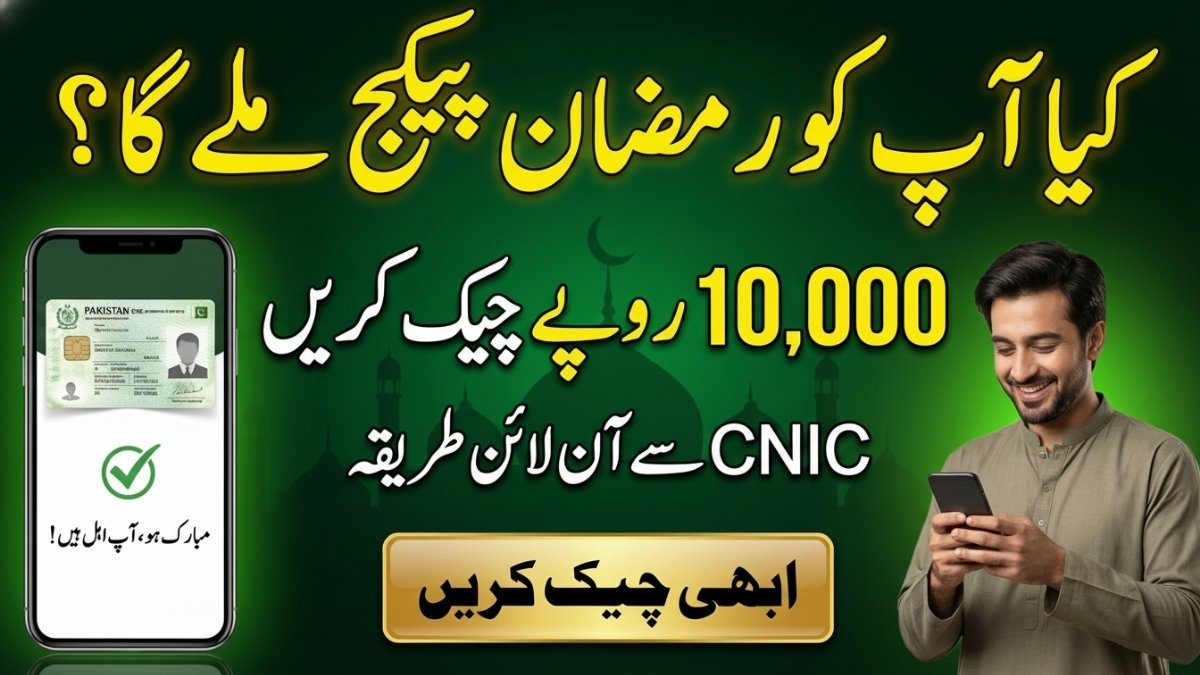
The Rs 10000 Ramzan Package 2026 is a government relief program for low-income families during Ramadan. It helps deserving households manage basic expenses like food and daily needs. The system uses CNIC-based online verification to make the process easy and transparent.
To check your status, enter your 13-digit CNIC number on the official Ramzan Package portal. The system will show whether you are eligible, under verification, or not eligible. If approved, payment details are usually shared through SMS.
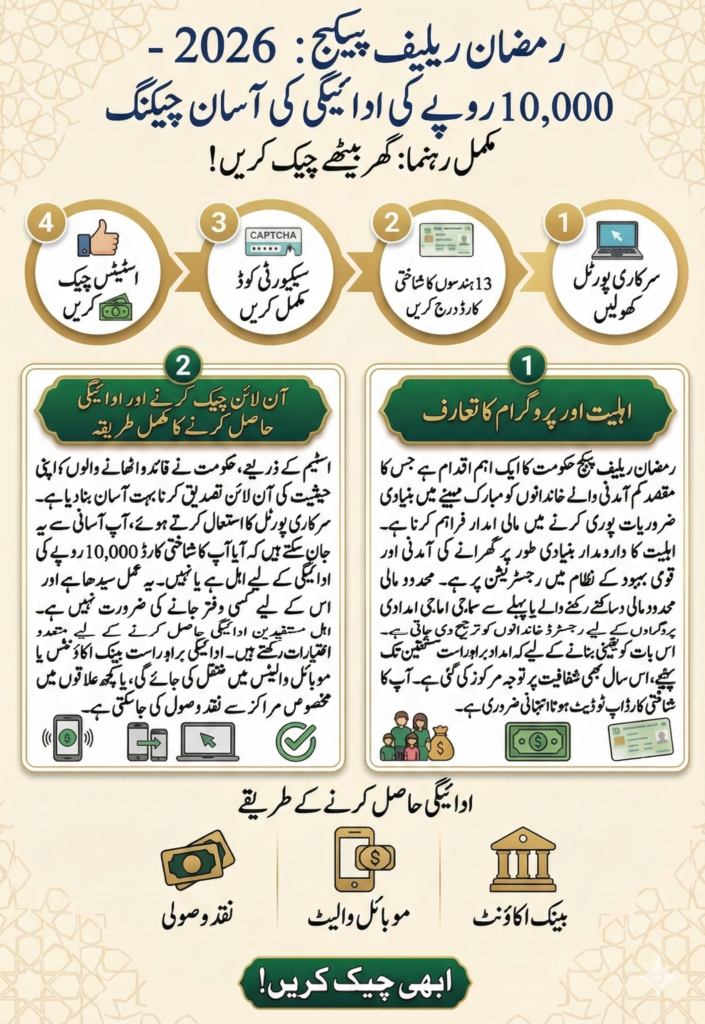
What is the Rs 10000 Ramzan Package 2026?
The Ramzan Relief Package 2026 is a financial assistance program launched to support deserving families across Pakistan during Ramadan. The government provides Rs 10,000 cash support so households can manage their basic needs without financial stress.
The system now uses digital verification through CNIC, which makes the process faster and more transparent. This method also helps prevent fraud and ensures the money reaches the right people.
Read Also: 8558 Ramzan Package CNIC Apply Code (2026)
Who is Eligible for the Rs 10000 Ramzan Package?
To see if you qualify, the government carefully reviews official welfare databases and your income records to ensure the funds reach those who need them most. You are likely eligible if your family has a limited income, your CNIC is active, you aren’t a high-earning tax filer, and you are already registered with support programs like BISP. Just keep in mind that the most vulnerable folks get priority, meaning daily wage workers, widows, disabled individuals, and seniors without pensions are usually placed at the front of the line.
How to Check Your Rs 10000 Ramzan Package Online by CNIC
Checking your eligibility is very simple. Follow these steps:
- Visit the official Ramzan Package portal.
- Enter your 13-digit CNIC number without dashes.
- Complete the captcha verification.
- Click on the Check Status button.
- Wait for the system to display your result.
You will usually see one of these results:
- Eligible – You qualify for the package.
- Under Verification – Your data is still being checked.
- Not Eligible – You do not qualify based on current records.
If you are eligible, you will receive further instructions through SMS.
Read Also: BISP Digital Wallet Expansion 2026 – Payments for 104,000 Families
How Will You Receive the Rs 10000 Payment?
After your application gets approved, you’ll receive your funds conveniently through a direct bank transfer, a mobile wallet, or a local cash collection center. Just make sure to double-check that your registered mobile number and CNIC details are completely accurate. Providing the correct information right from the start is the best way to ensure your money reaches you without any frustrating delays.
Common Problems During CNIC Verification
It’s completely normal to run into a few small hiccups while checking your status, like seeing a “CNIC Not Found” error due to a simple typo or database delay. If your screen shows an “Under Verification” message, don’t worry—your data is just still being processed, so simply check back a little later. Keep in mind that heavy traffic during Ramadan can sometimes cause the website to load slowly, so a little patience will go a long way.
Important Tips to Avoid Problems
Follow these tips for a smooth process:
- Enter CNIC carefully without spaces or dashes
- Use the official government website only
- Keep your mobile number active
- Never share OTP codes with anyone
Remember, no fee is required to check or receive the Ramzan Package.
Read Also: 8070 Nigahban Card Registration & CNIC Verification
FAQs
How can I check my Rs 10000 Ramzan Package?
You can check your eligibility online by entering your CNIC number on the official Ramzan Package portal.
How long does it take to receive the payment?
After approval, payments are usually processed within a few days to a couple of weeks.
Can I check my CNIC status multiple times?
Yes, but avoid repeated checks in a short period.
What if my status shows “Not Eligible”?
Eligibility is determined through government databases, so decisions are usually automatic.